
Leavenworth County Criminal Court Records
A criminal court record is the court case file, not the arrest record itself. In Leavenworth County, felony cases and many county or state misdemeanors proceed in District Court. The case file can include the complaint or charging document, appearances, arraignment, bond orders, motions, plea entries, trial entries, disposition, sentencing order, probation violation entries, financial assessments, and later expungement filings if a petition is filed.
City ordinance and city traffic prosecutions may be in municipal court instead of District Court. The City of Leavenworth Municipal Court handles city ordinance and traffic cases and does not conduct jury trials. Lansing and Tonganoxie also have municipal court routes for city citations. Serious criminal offenses, divorce, probate, juvenile, small claims, and many other matters are District Court work under the First Judicial District.
The K.S.A. 21-6614 expungement statute is important for criminal court records because it controls many Kansas expungement requests for convictions, arrest records, and diversion agreements.
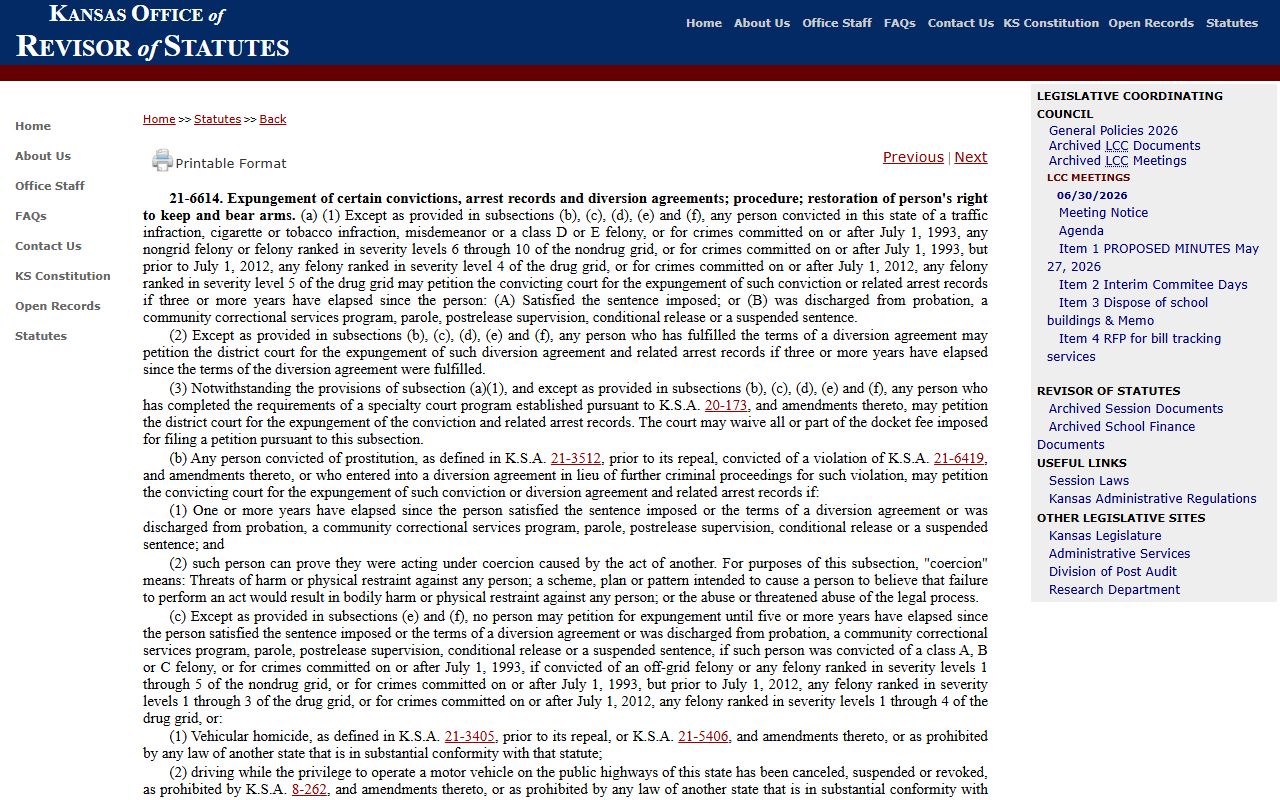
The statute is relevant only after a person seeks a court order; it does not erase a Leavenworth County criminal case from public view automatically.
How to Search Leavenworth County Criminal Court Records
Start with Kansas CaseSearch for public District Court criminal case information. If a public criminal case does not appear online, use the public terminal at the Leavenworth courthouse or contact the Clerk of the District Court records clerk. Local copy requests should include the case number or book and page location if known. The clerk estimates costs before copies are mailed.
- Confirm whether the case is District Court, municipal court, state prison, or federal court.
- Search the public case system by defendant name, case number, court, county, or case type when available.
- Open the docket and look for charge entries, arraignment, bond orders, motions, plea, trial, disposition, and sentence.
- Use the courthouse terminal or records clerk when the online record is incomplete, older, sealed in part, or not yet digitized.
- Request certified copies from the Clerk of the District Court when a court-certified order, disposition, or sentence is needed.
For the arrest-to-charges pathway before the full case file is complete, the Leavenworth County arrest records and court charges page focuses on booking fields, charging decisions, bond source, and charge status.
Leavenworth County Criminal Case Flow
The criminal case file grows as the case moves through court. A charge may first appear in the jail roster or in a prosecutor filing, but the court record becomes the official case timeline once the charging document is filed. The County Attorney prosecutes criminal charges, child in need of care cases, care and treatment proceedings, and Veterans Treatment Court services for Leavenworth County.
Case flow: Charges Filed › Arraignment › Pretrial / Motions › Plea or Trial › Disposition › Sentencing
| Stage | What Happens |
|---|---|
| Charges Filed | The complaint, information, or other charging document starts the criminal case record. |
| Arraignment | The defendant is advised of charges and enters a plea or has the next setting scheduled. |
| Pretrial / Motions | The docket may show discovery disputes, continuances, evidentiary motions, plea negotiations, or bond changes. |
| Plea or Trial | The record shows whether the case resolves by plea, bench trial, jury trial, dismissal, or acquittal. |
| Disposition | The outcome is entered for the case or for each charge, which may differ across counts. |
| Sentencing | The court enters sentence, costs, probation terms, custody credit, restitution, or other ordered conditions. |
What a Leavenworth County Criminal Court Record Shows
The most important fields are the ones that separate accusation from outcome. A criminal case file can show charges that were later reduced, dismissed, amended, or resolved by plea. It can also show bond orders, future hearings, probation violations, expungement filings, and financial obligations. A single case can have more than one count, and each count may have a different disposition.
| Field | What It Shows |
|---|---|
| Case Number | The District Court identifier used for docket searches and copy requests. |
| Defendant | The person charged, with public identifying details limited by law and court rule. |
| Charges | Filed offenses, statute or code references, severity level, count number, and amendments when public. |
| Bond | Release conditions, cash or surety details, no-bond status, or warrant-related bond source. |
| Plea | Guilty, not guilty, no contest if entered, or later plea changes. |
| Disposition | Dismissed, convicted, acquitted, diversion, judgment, expunged, sealed, or appealed. |
| Sentence | Jail or prison term, probation, costs, restitution, fines, treatment, or other conditions. |
| Financial Assessments | Docket fees, court costs, restitution, fines, copy fees, or other court-ordered amounts. |
County Attorney Role in Leavenworth County Criminal Records
The Leavenworth County Attorney's Office is located at 601 South 3rd Street, Suite #3069, Leavenworth, KS 66048. The office phone is 913-684-0899, and the office information page lists countyattorney@leavenworthcounty.gov while warning that suspected criminal activity should be reported to law enforcement rather than by email to the prosecutor.
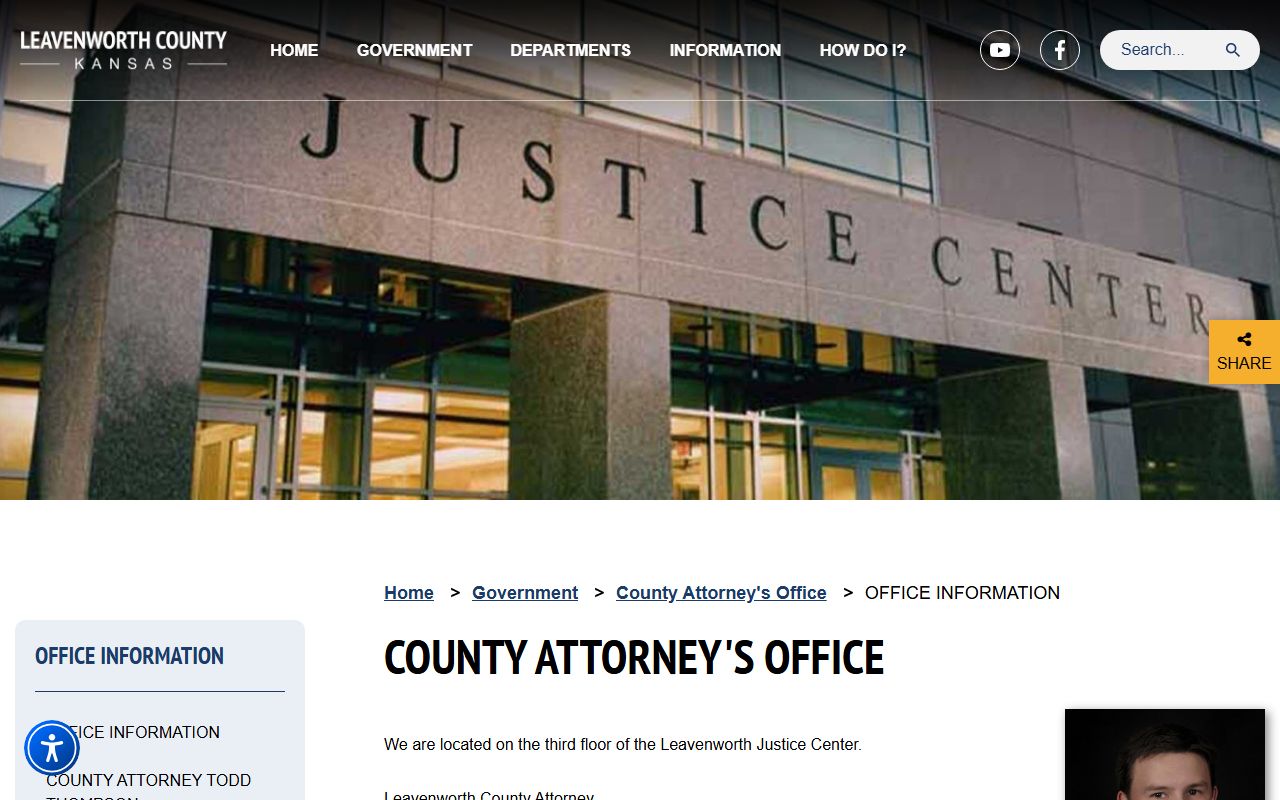
The County Attorney's role explains why the court record may change after arrest: prosecutors can file, amend, reduce, dismiss, or pursue different charges as the case develops.
Charges vs. Convictions in Leavenworth County
A charge is an accusation filed in court. A conviction is an outcome based on a guilty plea, no contest plea accepted by the court, or finding of guilt after trial. A Leavenworth County criminal court record can show charges that never became convictions because they were dismissed, amended, reduced, resolved through diversion, or ended in acquittal.
| Charge | Conviction | |
|---|---|---|
| Stage | Filed at or near the start of the criminal case. | Entered after plea or trial outcome. |
| Meaning | Alleged offense being prosecuted. | Court-recognized guilt for an offense. |
| Can Change | May be amended, reduced, added, dismissed, or dropped. | May be appealed, expunged if eligible, or affected by post-conviction orders. |
| Record Use | Shows what was alleged and litigated. | Shows the final criminal liability and sentence basis. |
Reading Leavenworth County Dispositions and Sentences
Disposition is the outcome of the case or charge. A docket can show guilty, not guilty, dismissed, diverted, acquitted, or appealed outcomes. Sentencing records may show probation, custody time, restitution, fines, treatment obligations, or other terms. For felony or misdemeanor cases, the docket fee schedule lists criminal murder or manslaughter at $202.50, felony at $193, misdemeanor at $158, criminal expungement at $195, arrest expungement at $195, and juvenile expungement at $195.
The County Attorney Expungement Day page describes a local effort to help people with eligible Leavenworth County arrests or convictions seek expungement assistance.
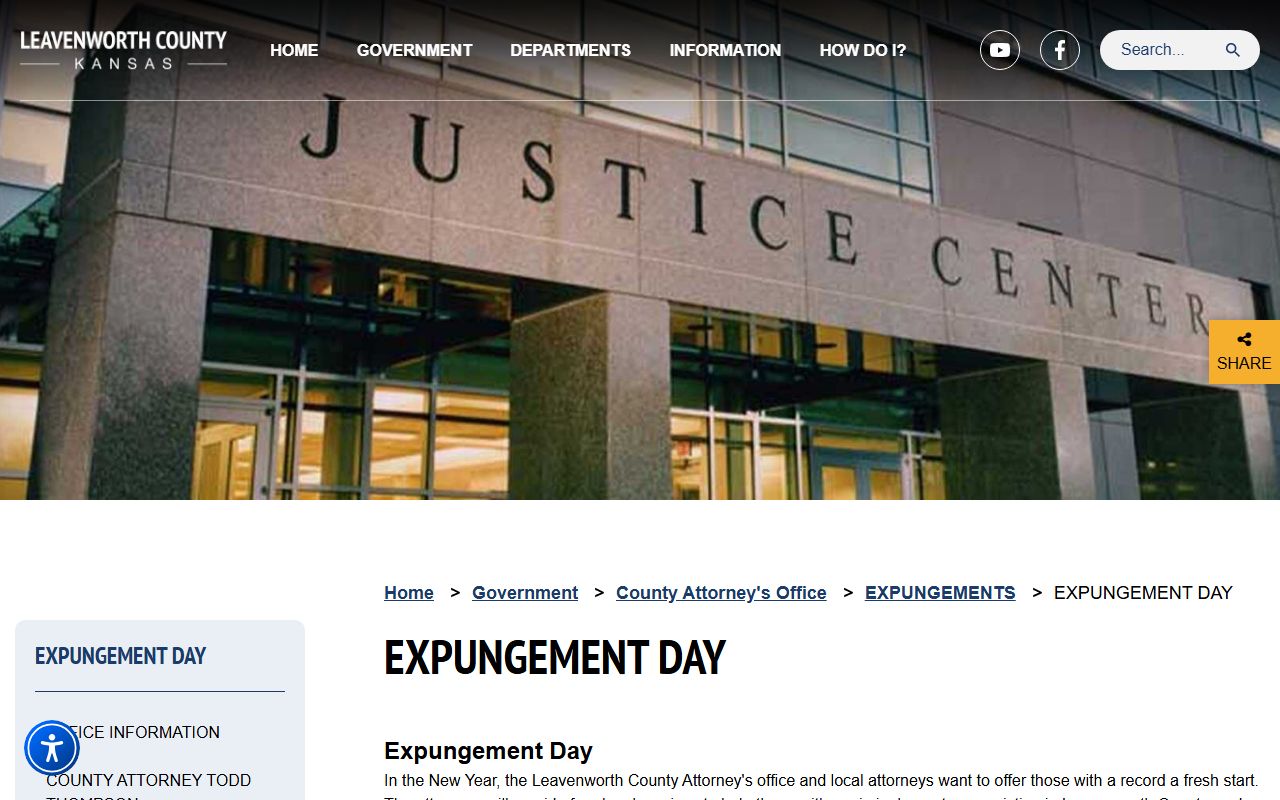
That local program is useful for public access questions, but eligibility and relief still depend on court filings and a judge's order.
Sealed vs. Expunged Criminal Court Records
Kansas distinguishes records that are sealed or otherwise closed from records that are expunged after a statutory process. In both situations, the public may not see what an ordinary search would otherwise reveal. The practical result depends on the statute, the order, the record type, and whether a criminal justice agency has continuing access.
| Sealed | Expunged | |
|---|---|---|
| Public Visibility | Hidden from ordinary public access by law or court order. | Public access is limited after a granted expungement petition. |
| Common Source | Juvenile, adoption, mental health, sensitive victim, or court-ordered closure. | Eligible arrests, convictions, and diversions under Kansas expungement law. |
| Record Status | The record exists but is closed or redacted. | The record is not physically destroyed, but access and disclosure are restricted by order and statute. |
| Access | May require court permission or statutory authority. | May remain available to criminal justice agencies or in limited statutory situations. |
Public Access to Leavenworth County Criminal Court Records
Public access begins with Kansas Open Records Act principles and then narrows through court-record rules and confidentiality statutes. K.S.A. 45-215 supports Kansas public-record access unless another law closes the record. Kansas Supreme Court Rule 22 governs public electronic access to case records. K.S.A. 38-2309 governs juvenile court record disclosure and preservation.
Key Statutes:
K.S.A. 21-6614 explains expungement of certain convictions, arrest records, and diversion agreements.
Kansas Supreme Court Rule 22 controls what public case records can appear online or at public terminals.
Defense Counsel and Federal Criminal Records
Kansas indigent felony defense is handled through the Kansas State Board of Indigents' Defense Services. No Leavenworth-specific public defender office page was found in the research. Defendants in Leavenworth County cases should request appointed counsel through District Court rather than relying on a nonlocal office listing.

BIDS is relevant to criminal case records because attorney appointments and representation can appear in the court file.
The BIDS contact information page lists administrative and nearby public defender offices, including Topeka, Olathe, and Kansas City, Kansas contacts.

Those contacts support the statewide defense system, while the actual appointment request still belongs in the pending Leavenworth County case.
Federal prosecutions are separate from Leavenworth County criminal court records. The U.S. Attorney's Office for the District of Kansas prosecutes federal crimes in Kansas.
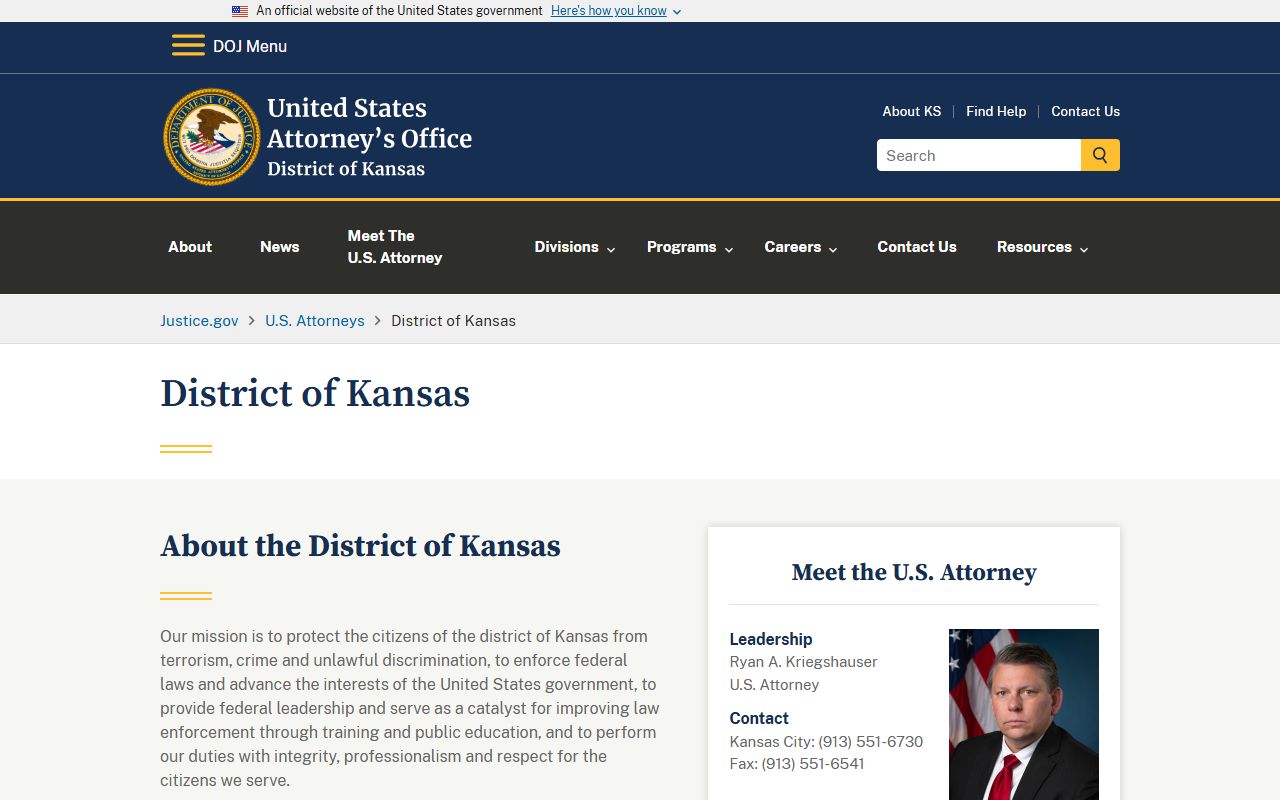
A federal criminal case should be searched through federal court systems, not through the Leavenworth District Court clerk.
Restricted Leavenworth County Criminal Court Records
Restricted criminal court records include juvenile records, sealed cases, sealed documents, sensitive victim identity information, medical information, personal identifiers, and records affected by expungement orders. Sheriff's records have additional law-enforcement exceptions for criminal investigation records, criminal intelligence, lab files, undercover or informant identities, attorney-client privileged records, many personnel records, and suspicious activity reports.
Background checks should not be built from casual court searches alone. Court records can be incomplete, delayed, sealed in part, or later changed by dismissal, diversion, appeal, or expungement. Employers, landlords, insurers, creditors, and other regulated users must follow the Fair Credit Reporting Act and applicable Kansas law rather than treating public docket review as a consumer report.
Important: Public docket research is not an FCRA consumer report and should be verified with the originating court.