
Leavenworth County Arrest Records and Court Charges
Leavenworth County arrest records are created on the law-enforcement and jail side. They may identify the arresting agency, booking time, booking number, age, gender, race, charges shown at booking, bond, next court date, and warning notes about possible changes. Court charge records are different. They begin when the County Attorney, city prosecutor, or other authorized prosecutor files a charging document with the court.
The county jail roster may show a charge before the full court docket is complete. The roster sample warned that charges and bail amounts can change after court appearances and told bond companies and people posting bail to contact detention staff at 913-682-5724 for correct bail amount, charges, and case numbers. The full criminal case file and outcome belong in Leavenworth County criminal court records, while booking detail belongs with the jail and sheriff.
How to Find Leavenworth County Arrest Records and Charges
Use the record source that matches the stage of the case. For booking and current custody, the Sheriff's Office inmate roster is the live local route. For filed court charges, use Kansas CaseSearch, the Leavenworth courthouse public terminal, or the Clerk of the District Court. For charges prosecuted by a city, check the municipal court that issued the citation or ordinance charge.
- Check whether the person is currently in custody or recently released through the Leavenworth County Sheriff's inmate roster.
- Read the roster charge fields carefully, including statute or code, charge narrative, bond source, amount, and next court date.
- Search Kansas CaseSearch or use the courthouse terminal for filed District Court charges and case docket entries.
- Contact detention staff for current bail, charge, and case-number confirmation before relying on roster data for bond decisions.
- Use the Clerk of the District Court for certified court copies after a case has been filed.
The K.S.A. 38-2309 juvenile record statute is one reason some charge information may be unavailable to the general public.
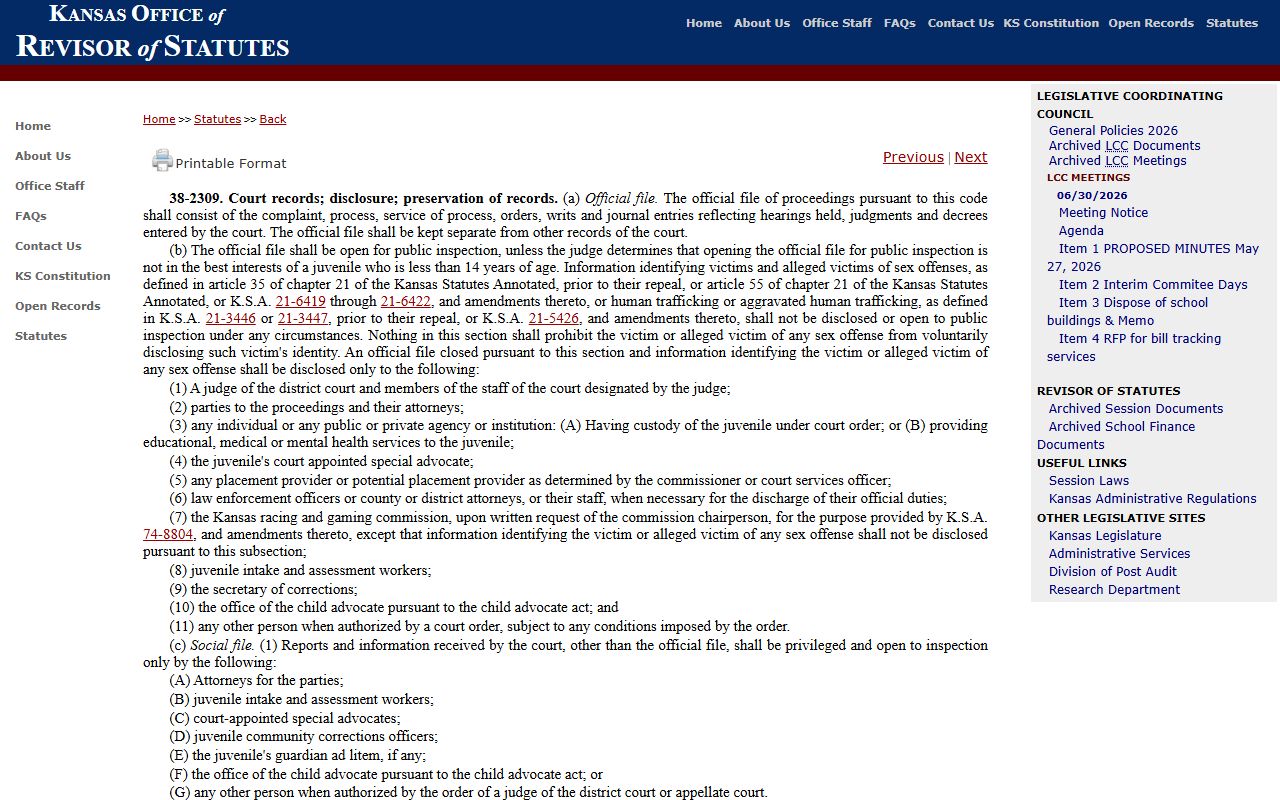
Juvenile limits are important because arrest records and charges after arrest are not equally public for all ages or case types.
Charges After Arrest: Complaint, Information, and Indictment
The charge record begins with a formal accusation. In Leavenworth County District Court, a complaint or other charging document can start the case and tie the arrest event to the court file. The County Attorney decides whether to file or amend charges in District Court. A municipal prosecutor may handle city ordinance or local traffic matters in municipal court.
| Charging Document | Who Usually Files It | What It Does | Record Impact |
|---|---|---|---|
| Complaint | Prosecutor or authorized complainant | Sets out the alleged offense and starts many criminal cases. | Creates the first charge entry the court can track. |
| Information | Prosecutor | States formal charges after prosecutorial review. | May replace, clarify, or refine earlier allegations. |
| Indictment | Grand jury | Charges an offense through grand jury action. | Can start or frame a serious criminal prosecution. |
Leavenworth County Arrest Records Jail Roster Fields
The Sheriff's current inmate roster is the most visible local arrest and booking source. It has current and 48-hour release routes, name search, current and released filters, sort options, and profile links. The Sheriff's disclaimer says the information is collected from public sources and maintained for convenience, and accuracy or authenticity cannot be certified.
| Roster or Profile Field | What It Shows |
|---|---|
| Booking Number | The jail's booking identifier, such as the sample profile's booking number field. |
| Arresting Agency | The agency that made the arrest, such as Leavenworth Police Department in the sample profile. |
| Booking Time | The date and time the person was booked into custody. |
| Charges | Statute or code, charge narrative, and classification such as felony when shown. |
| Bond | No bond, cash or surety amount, and source such as statute, court, or warrant. |
| Next Court Date | The next listed appearance, which should be confirmed with detention or court staff. |
| Warning Note | Notice that charges and bail amounts may change after court appearances. |
Charge Status in Leavenworth County Court Records
Charge status can change as the prosecutor reviews reports, the court holds hearings, evidence is tested, plea talks occur, or a judge rules on motions. One arrest can produce several charges, and each count can end differently. A charge can also appear in the roster before the court file shows the final filed version.
| Status | What It Means | Where It May Appear |
|---|---|---|
| Pending | The charge is active and not yet finally resolved. | CaseSearch, docket, clerk record, or roster before hearing. |
| Amended | The prosecutor or court record changes the charge language, count, or statute. | Criminal docket entries and filed charging documents. |
| Reduced | The charge moves to a lower severity or different offense, often through plea or amendment. | Docket, plea entry, or disposition record. |
| Dismissed | The charge is ended by court order or prosecution action. | Disposition entry for that count or case. |
| Diversion | Prosecution is handled through a diversion agreement if accepted and completed. | Case docket, County Attorney diversion materials, or final disposition. |
| Expunged | Public access is limited after a petition, eligibility review, and court order. | May disappear from public search or show limited public information. |
County Attorney Charging Decisions After Arrest
The Leavenworth County Attorney's Office is responsible for prosecution of criminal charges, child in need of care cases, care and treatment proceedings, and Veterans Treatment Court services. Todd Thompson is listed as County Attorney, and the office is at 601 South 3rd Street, Suite #3069, Leavenworth, KS 66048. The office phone is 913-684-0899. Its prosecution divisions include adult criminal, bad checks, domestic violence and sexual assault, juvenile, traffic, and care and treatment.
The Sheriff's fee page is relevant because arrest records, reports, service fees, fingerprints, and related sheriff services can have separate costs from court-copy fees.
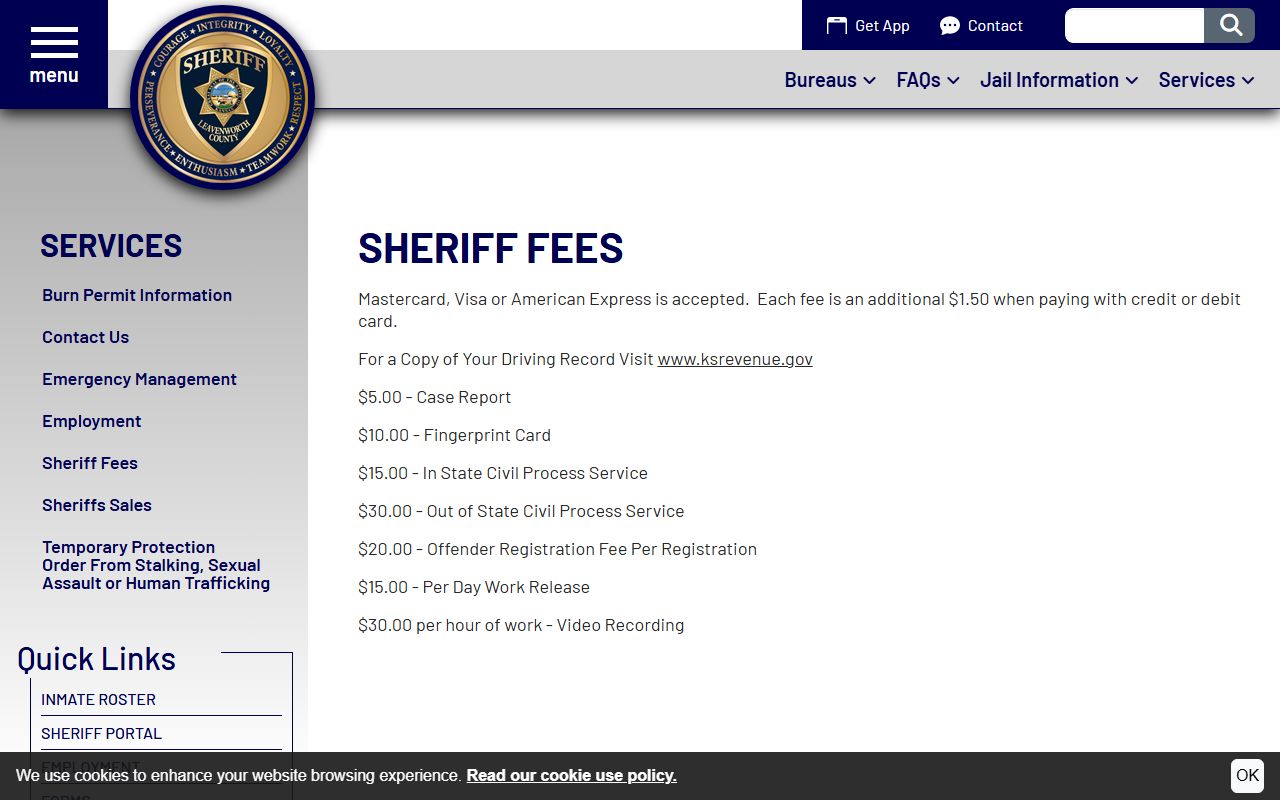
That fee source belongs to the sheriff side of the arrest record path, while filed charges and certified copies route through court offices.
Charge vs. Conviction in Leavenworth County
Charges after arrest are not convictions. A charge means the government is alleging an offense. A conviction means the court has accepted a guilty or no contest plea or entered a guilty finding after trial. A person can have an arrest record and filed charges without a conviction if the charge is dismissed, reduced, diverted, or resolved by acquittal.
| Charge | Conviction | |
|---|---|---|
| Timing | Appears after arrest or prosecutor filing. | Appears after plea or trial result. |
| Meaning | An accusation that still must be proven or resolved. | A final finding or plea of guilt for an offense. |
| Can Change | Can be amended, reduced, dismissed, or diverted. | Can be appealed, later expunged if eligible, or affected by post-conviction relief. |
| Best Source | Roster, charging document, docket, or clerk file. | Disposition, judgment, sentence, or certified court copy. |
Bond and Warrant Fields After Arrest
The jail roster sample showed bond source and amount, including no-bond status and the note that bond companies and people posting bail should contact detention staff for correct bail amount, charges, and case numbers. The research did not find a separate official public active-warrant search page for Leavenworth County. Warrant information may appear after booking, in a District Court docket, through municipal court, or by calling the Sheriff's Office or District Court.
The Leavenworth County Sheriff's Office contact page is the direct source for sheriff bureau contacts and nonemergency routing.
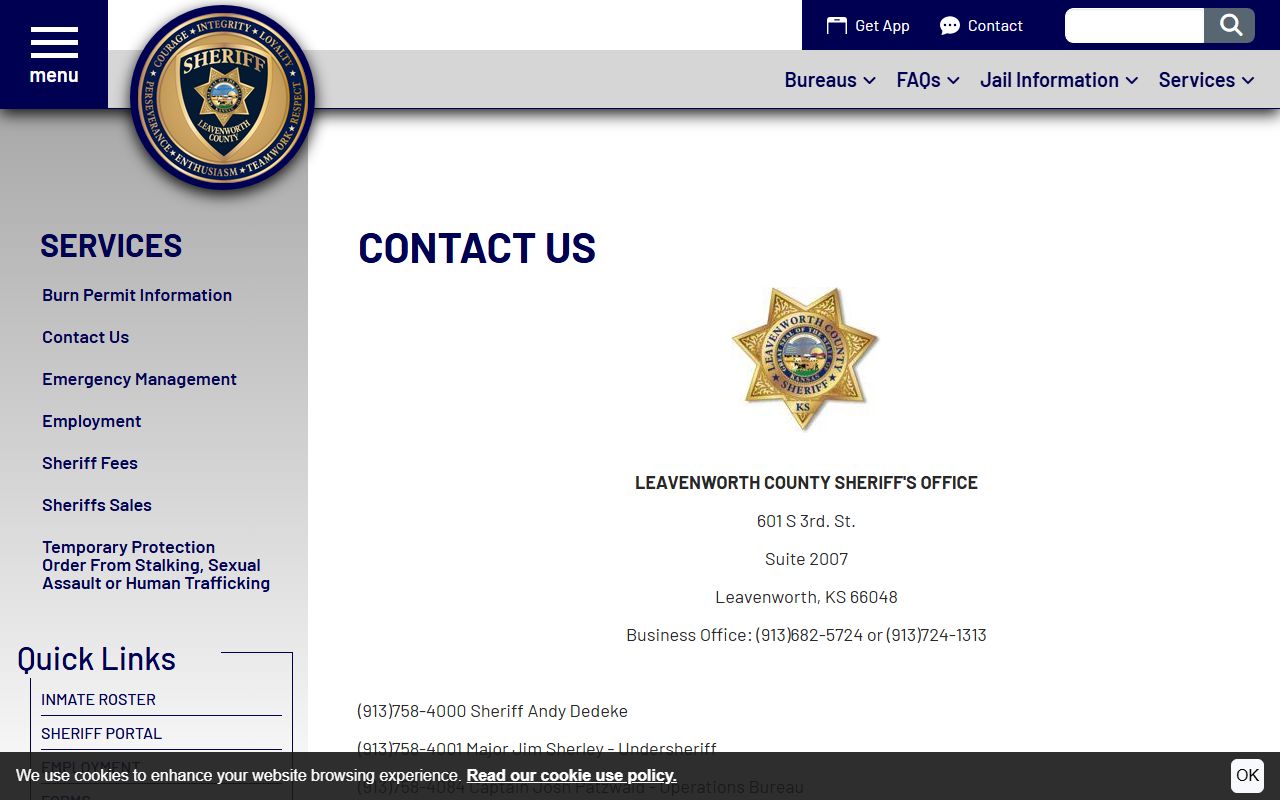
Direct contact is important because warrant status, bond, and charge data can change faster than a public page updates.
Statewide Charge and Custody Lookups
Statewide systems answer different questions from Leavenworth County arrest records. Kansas Department of Corrections information is for sentenced state-prison inmates or supervised offenders, not for every county jail booking. Kansas registered offender searches are separate from court records and should not be treated as a complete criminal-history database. Federal prisoner status belongs with the Bureau of Prisons, not the county jail.
The Kansas Department of Corrections is the state correctional source when a person has moved beyond county custody into state-prison or supervision records.

KDOC records can help after sentencing or transfer, but they do not replace Leavenworth County court charges or local booking records.
Sealed and Expunged Arrest Records and Charges
Leavenworth County arrest records and court charges may become unavailable to the public because of juvenile restrictions, sealing, expungement, redaction, or law-enforcement exceptions. Kansas expungement law can limit public access to eligible arrests, convictions, and diversions after a petition and court order. The Leavenworth fee schedule lists arrest expungement, criminal expungement, and juvenile expungement at $195.
| Sealed | Expunged | |
|---|---|---|
| Public Access | Closed by statute or court order. | Limited after a granted expungement petition. |
| Common Records | Juvenile, adoption, mental health, victim identity, or sealed warrant materials. | Eligible arrest, conviction, and diversion records under Kansas law. |
| Effect | Record remains but ordinary search cannot view it. | Public access is restricted, but criminal justice access may remain in allowed situations. |
Records Not Released Under KORA
The Sheriff's KORA FAQ lists several records that may be closed or limited, including criminal investigation records, criminal intelligence information, lab reports, informant identity, sexual-offense victim identity, privileged records, most personnel records, medical records, suspicious activity reports, and much body or dash camera video. County KORA rules also require written requests with the requester's identity and a detailed description, and the county gives a response no later than the third business day after receipt.
The Sheriff's press release page is useful for public safety notices, scam alerts, and agency updates, but it is not a certified arrest record or charge docket.
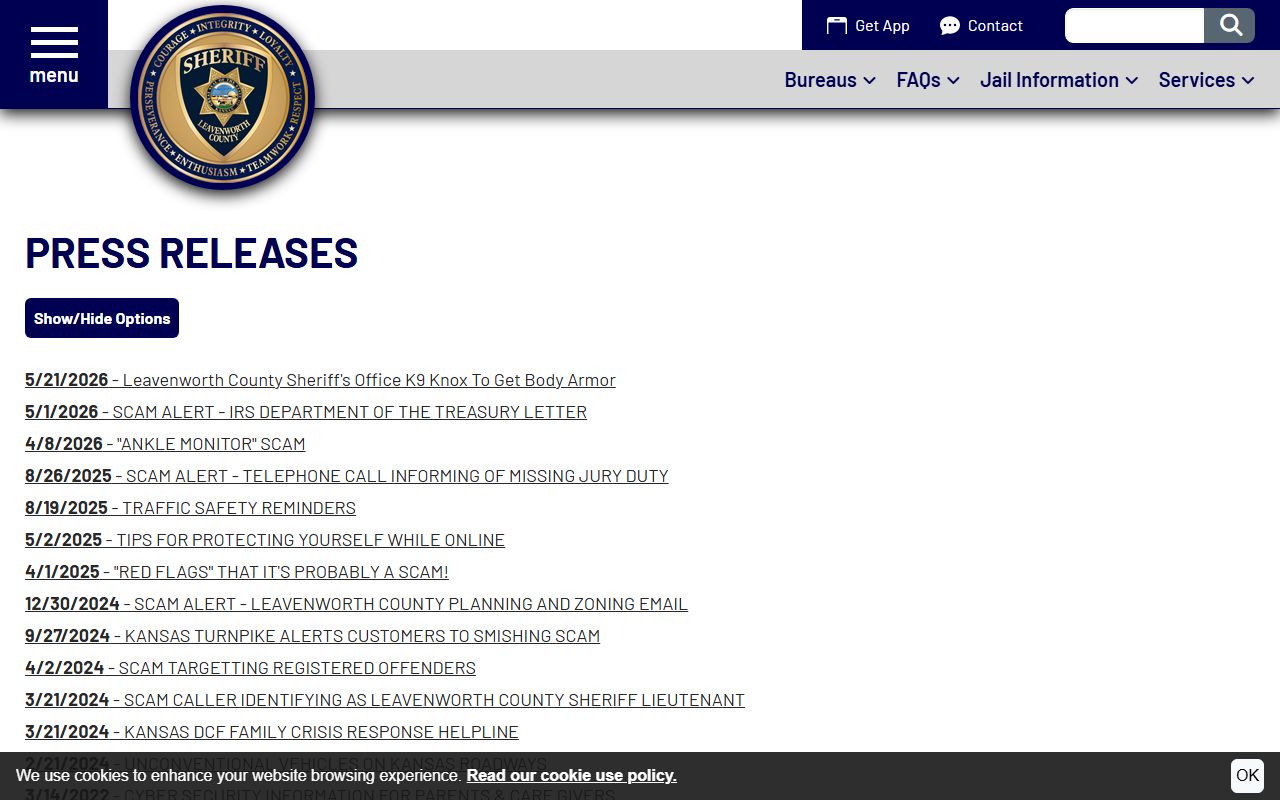
Press releases can point to events or trends, while official charge status must be verified through the court, detention staff, or the prosecutor's case path.
Important: Do not treat a roster charge as a conviction; verify final outcomes through the court record.